Dunwoody Park Project Wins ASCE Georgia’s Top Prize
 A collaboration between the City of Dunwoody, Lowe Engineers and Freese and Nichols took home one of the top prizes at the 2025 Georgia American Society of Civil Engineers (ASCE) Awards for Environmental Revitalization. The Dunwoody Nature Center Improvements project won the Project of Excellence in recognition of its innovative approach and environmental stewardship.
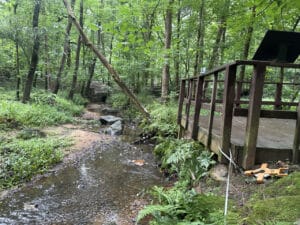
The City of Dunwoody initiated this project to address stream restoration and park improvements within the Dunwoody Nature Center – a unique amenity within the City of Dunwoody. The Freese and Nichols team provided design services for environmental enhancements that incorporated stormwater/stream/wetland improvements, a boardwalk, and reinforced educational opportunities throughout the park.
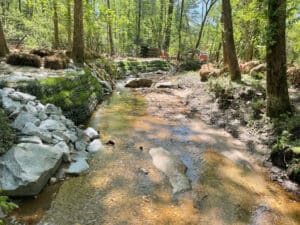
The team focused on a low-impact or a “surgical approach” for stream restoration and wetland improvements. This approach aimed to resolve areas of instability with minimal impact on existing functional streambanks and allowed the City to incorporate stormwater improvements while focusing on park improvements. By defining specific work areas and leaving unimproved sections down to precise stationing, the design minimized the project’s environmental footprint on the Nature Center, preserved a significant number of trees and enhanced post-construction aesthetics compared to a typical restoration site.
The design for park improvements at the Nature Center included an extended boardwalk to observe Dunwoody’s aquatic resources, an outdoor classroom and repair of stream and wetland issues. The site experienced notable erosion throughout the stream reach, at stormwater outfalls, from pedestrian use, and failing in-stream structures from a previous restoration project. The team’s design approach developed a construction package for stream and wetland improvements that aimed to solve areas of instability with minimal impact on existing functional streambanks. Stabilization required the installation of a rock toe, reconfiguration of existing in-stream structures, installation of log vanes to redirect flow and bank grading. Invasive plant species were removed from existing wetlands, and native vegetation was planted to support the habitat restoration of the native forested wetland.