

How Digital Delivery Is Reshaping Infrastructure
Infrastructure planning is entering a new era as smart, interactive tools replace paper-based plans. With 3D models and connected data, project teams can design with greater precision and communicate plans more clearly. Whether it’s a transportation project, a water/wastewater system or a major utility upgrade, digital delivery is helping communities understand what’s being built and why it matters.
Freese and Nichols is helping lead the transition by using 3D modeling across a wide range of disciplines. The result is better planning and designs that more closely reflect the needs of the people they serve.
Here are a few projects in Oklahoma and Arkansas where digital delivery is making a difference.
Laying the Groundwork for Smarter Infrastructure
The Oklahoma Department of Transportation is undergoing a full-scale digital transition, shifting from static PDFs to dynamic 3D models that will ultimately serve as construction documents. Freese and Nichols is one of three consultants working on the project, helping the department set up guidelines, organize its data and prepare for statewide implementation.
Advanced modeling helps spot issues early by showing how systems such as drainage and utilities interact. In the future, maintenance crews might use tablets in the field to access specifications instantly, speeding up repairs and reducing disruptions. The result is more reliable service and fewer surprises for the public.
Keeping Projects Moving and Communities Connected

On Sheridan Road in Lawton, Oklahoma, 3D modeling is helping a complex project stay on track while minimizing impacts to homes and businesses. The corridor includes a dense network of underground utilities and has limited right-of-way. These types of conditions often lead to delays during construction.
The team identified conflicts early and adjusted designs in advance, which helped them avoid many typical slowdowns. As a result, they reduced closures and interruptions, creating a smoother experience for people living and working nearby. The model also helped coordinate utilities, keeping all stakeholders aligned throughout the process.

Meanwhile, in Chickasha, Oklahoma, a new water treatment plant offers a rare opportunity to fully leverage digital delivery from day one. Using Revit, a 3D modeling tool, and Autodesk BIM 360, a cloud-based platform for collaboration, the project team created a visual concept early in the process that clearly showed how the facility would take shape.
City leaders, staff and decision-makers could visualize the plant’s layout well before final design, building support and streamlining approvals. With a subconsultant working on half the design, sharing a live model also made collaboration more efficient and reduced the need for revisions.
Making Improvements Understandable

Public engagement is often a challenge on projects involving complex traffic changes. That was the case in Tishomingo, Oklahoma, where a roundabout was planned at a major intersection.
To help people understand what was coming, the project team turned to 3D modeling. A fully modeled version of the intersection helped everyone see how grading, drainage and utilities would function together. This made it easier to gather feedback, address concerns and build trust in the process.
At the Rogers Pollution Control Facility in Arkansas, 3D modeling played a central role in a significant upgrade. Using drone-based LiDAR data, the Freese and Nichols team developed a detailed model showing both existing infrastructure and proposed improvements. The visuals were key in helping Rogers Water Utilities understand the full scale of new components such as the headworks and equalization basin.
The model supported construction sequencing, allowing operators to anticipate impacts and plan around them, and laid the groundwork for smoother final design. For a large facility upgrade, being able to see the connections between old and new infrastructure helped everyone stay on the same page.


Preserving Identity While Expanding Capacity
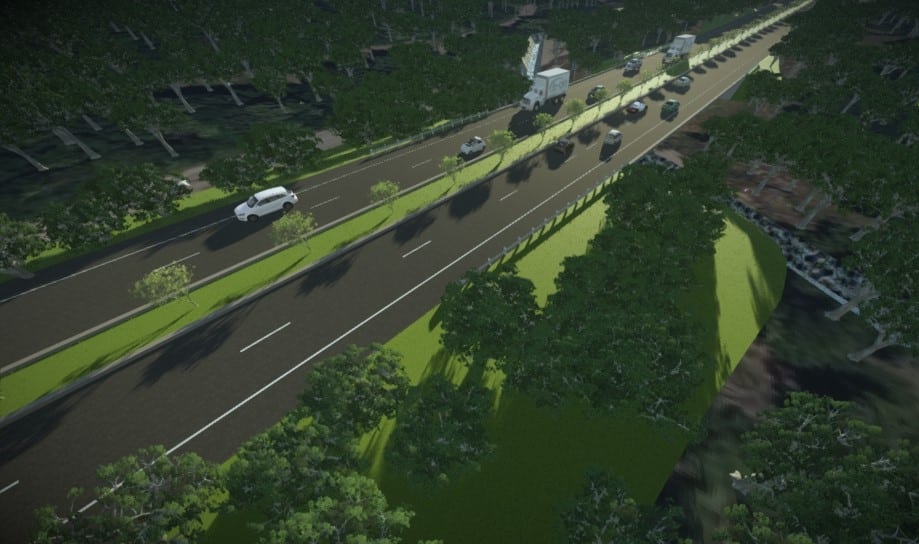
Tourism and growth in Hochatown, Oklahoma, are driving a major expansion of U.S. 259. The project is being carefully designed to minimize land impacts and preserve the area’s natural aesthetic.
Using 3D modeling, the project team evaluated how different alignments, configurations and retaining wall placements would affect the landscape. These visuals were then shared with the public. Residents could see in detail how the improvements would look in their community, leading to more informed discussions and more thoughtful design decisions. By putting visuals in people’s hands, the team is helping bridge the gap between technical design and the local community’s vision as discussions continue on the project.
Envisioning the Future of Digital Delivery
Digital delivery is changing the way people experience infrastructure, from the first concept to the final build.
“It’s one thing to point to a drawing and describe a new facility. It’s another thing entirely to show them a realistic model and let them walk through it,” said Jason Cocklin, a water and wastewater treatment engineer at Freese and Nichols. “That changes how people understand and support these projects.”
Transportation engineer Kayla Burd said she has seen that transformation up close.
“This shift has been one of the most exciting parts of my job,” she said. “Just seven years ago, we were still using old-school cross sections. Now, everything we do is built on 3D models. Paper is going away, and this is where the industry is heading, because it works.”
To learn more about our digital delivery services, please contact Kayla Burd, Jason Cocklin or Brandon Huxford.
Be on the lookout for a special series on Digital Delivery in the coming months, where we will examine how emerging technologies, innovative workflows and collaborative platforms are transforming the way we plan, design, and deliver infrastructure projects. From cloud-based design tools to automation and AI integration, this series will highlight success stories, best practices, and insights from teams leading the digital shift across the industry.