

Planning the Future of Higher Education Campuses
This article is part one of a two-part series on how colleges and universities can navigate change through strategic campus planning and program management. With decades of experience in higher education, Freese and Nichols helps institutions develop long-range plans and deliver capital improvements that support academic missions, student success and community impact. Part one explores how planning creates a foundation for growth; part two will follow the path from vision to implementation through program management.
Colleges and universities play a vital role in shaping students’ futures and supporting the campuses’ surrounding communities. These institutions also support local economies, innovation and workforce development. Today, they face growing challenges, including enrollment shifts, financial pressures and changing expectations for campus facilities. In this environment, thoughtful planning plays a critical role in helping colleges adapt and thrive.
Freese and Nichols partners with colleges and universities to plan and deliver campuses that meet today’s needs while preparing for tomorrow. Our expertise in campus planning helps institutions align facilities with their goals, use resources wisely and create spaces where students and faculty thrive.
“College campuses are like small cities, with utilities, transportation, recreation, technology and housing all interconnected,” said Shad Comeaux, an Urban Planning + Design Project Manager. “Planning for that complexity makes higher education projects exciting and rewarding.”
Helping Set Long-Term Direction With Practical Solutions
Freese and Nichols has a long history of helping higher education clients set long-term direction and carry out practical solutions. We take a comprehensive view of each campus, making sure facilities, infrastructure and land use work together to support academic priorities and student life. Here are a few examples of that work:
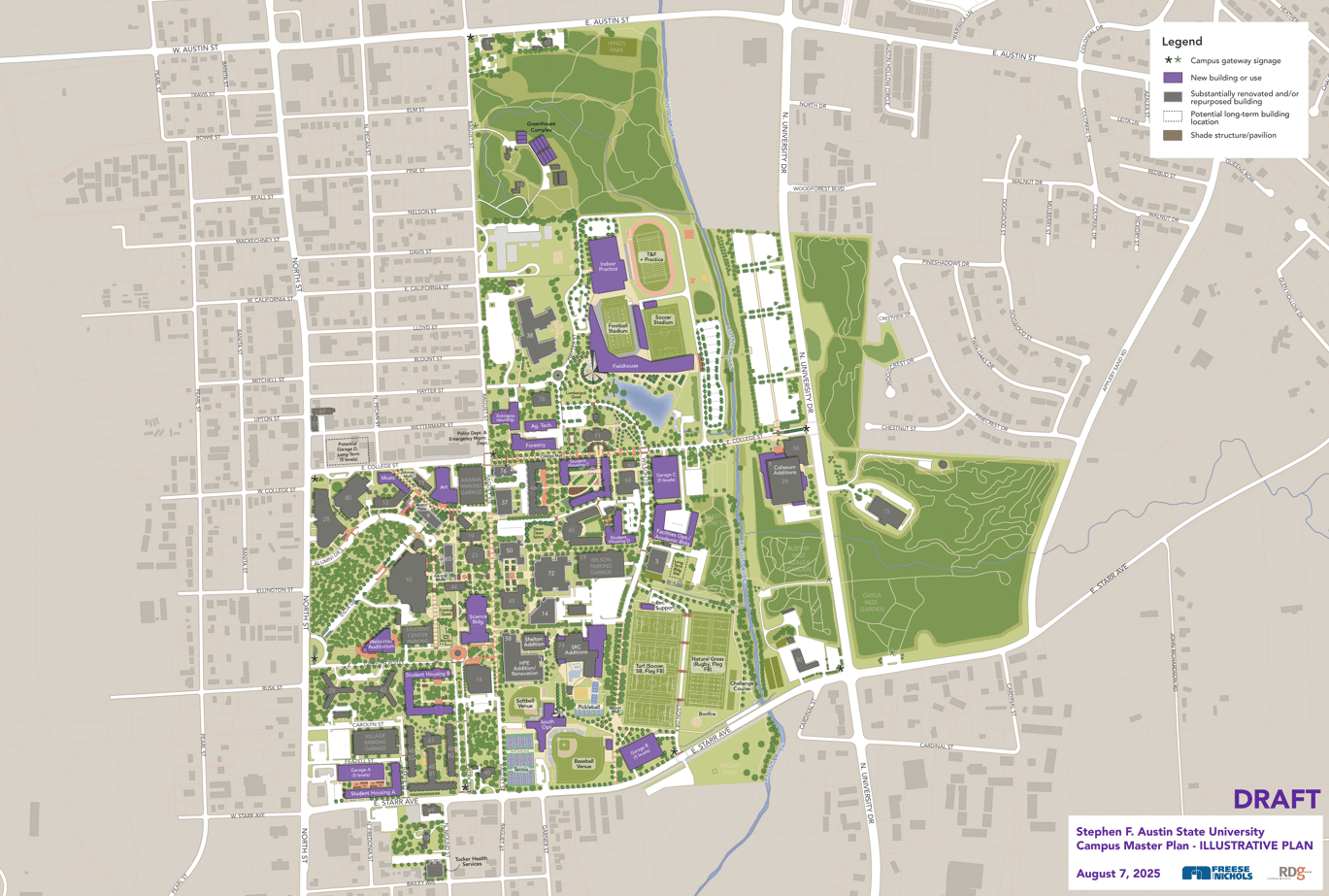
Stephen F. Austin State University
This ambitious plan covered nearly every aspect of the university. The work included facility condition assessments, parking and traffic studies, a utility master plan, a technology plan, an athletics plan, space utilization and enrollment projections and planning-level cost estimating. The plan tied guiding principles directly to the university’s strategic plan, aligning investments with SFA’s goals as the newest member of the University of Texas System.
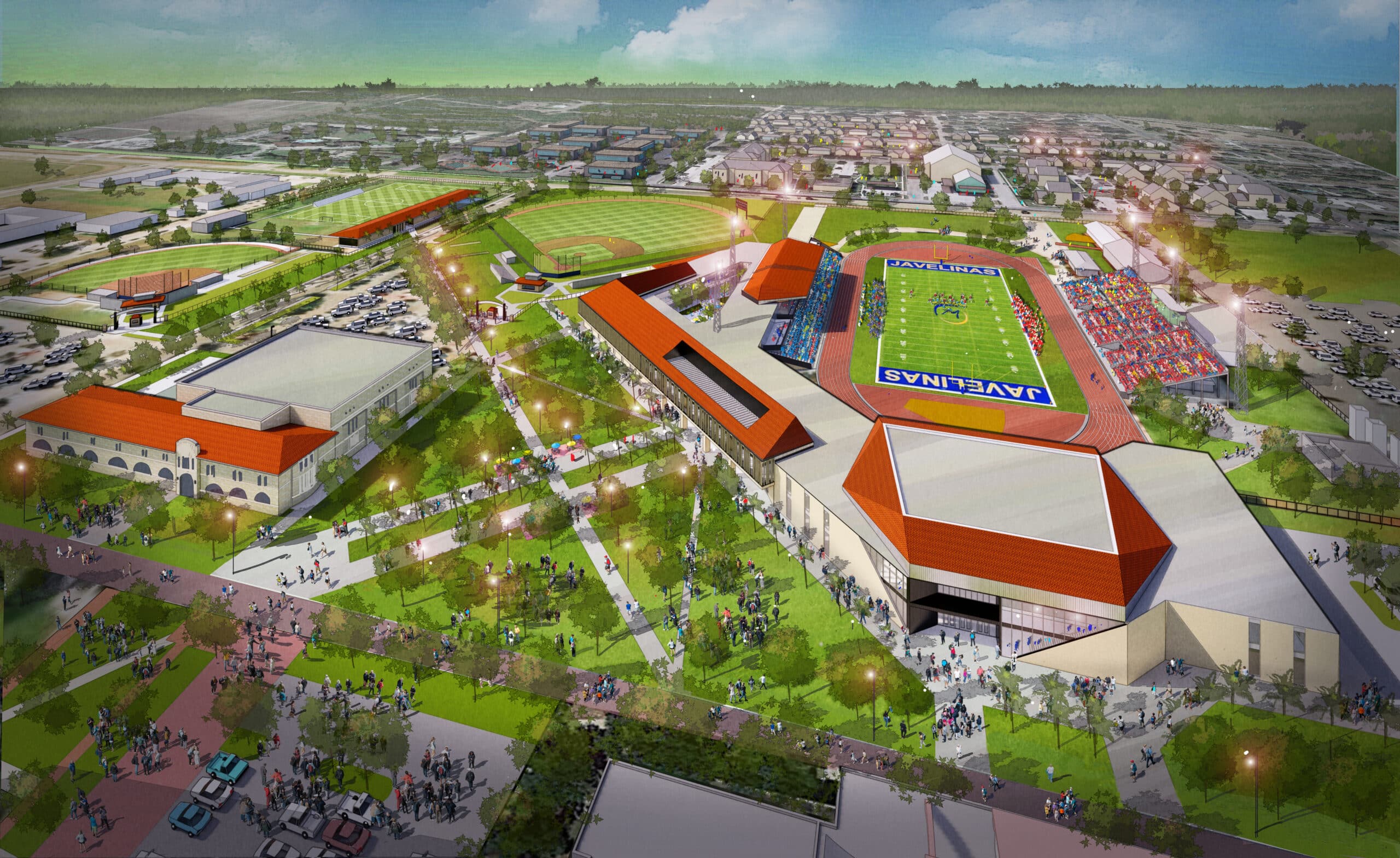
Texas A&M University Kingsville
This master plan extended beyond the main academic campus to four satellite sites: an agricultural research farm, a wildlife research center, a citrus center and a waterfront property. Freese and Nichols balanced the university’s expansion goals with environmental stewardship, proposing new research and academic facilities while addressing deferred maintenance and selective demolitions. The plan also incorporated input from environmental experts so South Texas ecosystems would be protected as the university expanded its academic reach.

Sul Ross State University, Eagle Pass Campus
Designing a new campus from the ground up on a 100-acre site, Freese and Nichols developed a plan that envisioned classrooms, laboratories, student housing, athletic facilities and student life amenities, while helping the university think strategically about recruiting students from the Rio Grande Valley and northern Mexico. Although the initial site was not developed, the framework continues to guide Sul Ross’s expansion strategy. Beyond Eagle Pass, Freese and Nichols has partnered with Sul Ross for more than a decade, providing campus plan updates, housing studies and facilities planning across the Texas State University System.
Tyler Junior College
Freese and Nichols completed a comprehensive facilities master plan for Tyler Junior College in 2022, covering five campuses, incorporating leadership input, educational goals and analysis of existing conditions. After the plan, the college identified two priority projects, the Centennial Center (Alumni Center) and the Campus Center Quad, for further study and potential donor funding. We refined conceptual designs, developed cost opinions and prepared graphic materials to support fundraising. With a bond vote scheduled for November, multiple projects could soon move forward at the same time, showing how campus planning and program management intersect.
Designing for What’s Ahead
As higher education becomes more complex, many institutions are navigating shifting academic needs, constrained budgets and aging infrastructure. A strong campus plan connects these factors, connecting physical space to strategic priorities.
“Our job is to align campus planning with each institution’s strategic plan,” Shad said. “That way, the guiding principles of the plan connect directly to their mission.”