

Roadway Restoration Transforms Historic Street into Accessible Community Hub
As the City of Stephenville, Texas, looked to revitalize its downtown, it recognized the opportunity to enhance the adjacent Long Street as part of the broader improvement effort. The two-lane residential street featured early 20th-century brick pavement that was either in disrepair or had been covered with asphalt.
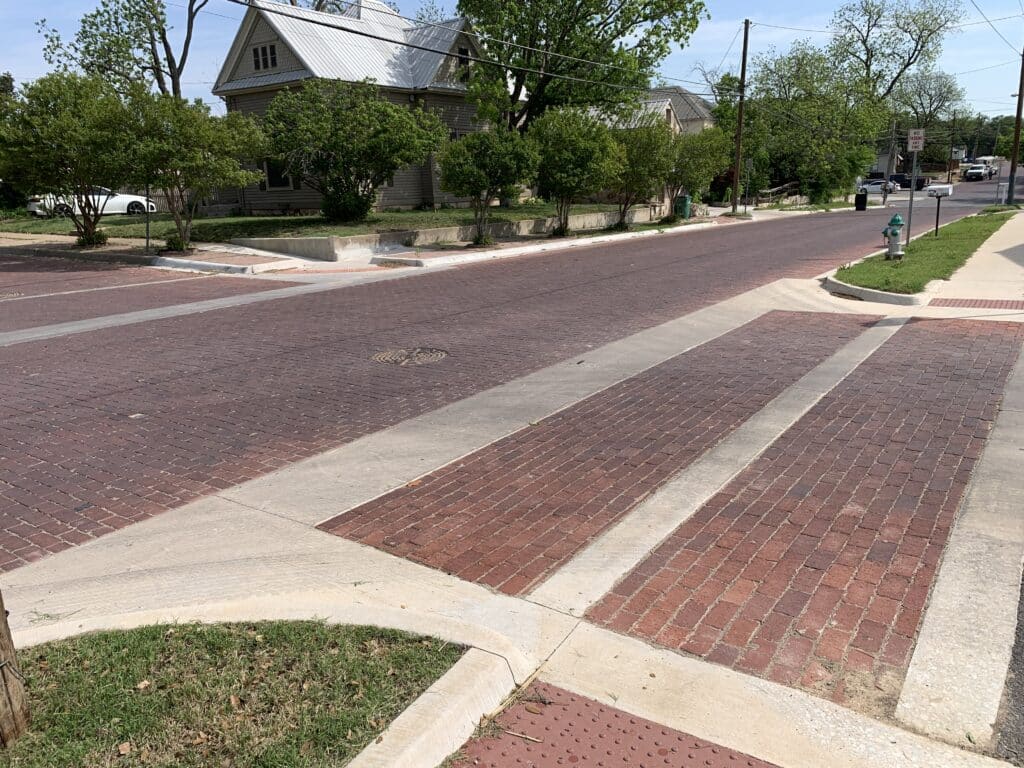
The City partnered with Freese and Nichols’ Transportation team to restore the original look and feel of the historic bricks and improve walkability and accessibility to Downtown Stephenville and the neighboring Parks & Recreation facilities with sidewalks and curb ramps — bringing new life to the area while honoring its legacy.
Historic Challenges Required Modern Solutions
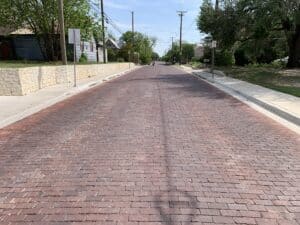
To reconstruct the brick pavement on several blocks of the eastern portion of Long Street, the Freese and Nichols team created details and specifications for the contractor to salvage, clean and reinstall the original bricks. Concrete was poured beneath the brick to provide a more stable foundation, addressing the bumps and potholes that previously afflicted the roadway.
Many of the historic homes within the project limits sit on lots several feet higher than the street, so the addition of 5-foot sidewalks required extensive retaining walls and utility relocations within the narrow right-of-way.
The City coordinated with property owners prior to construction, alerting them of the improvements and discussing any of their questions or concerns.
The team relied on City GIS records, staff knowledge and site visits to estimate the location of utilities throughout the 3,300 LF of the project. When the contractor encountered existing utilities located where they weren’t originally assumed to be during construction, plans were quickly modified utility designs to avoid conflicts.
Replacing a 100-Year-Old Box Culvert
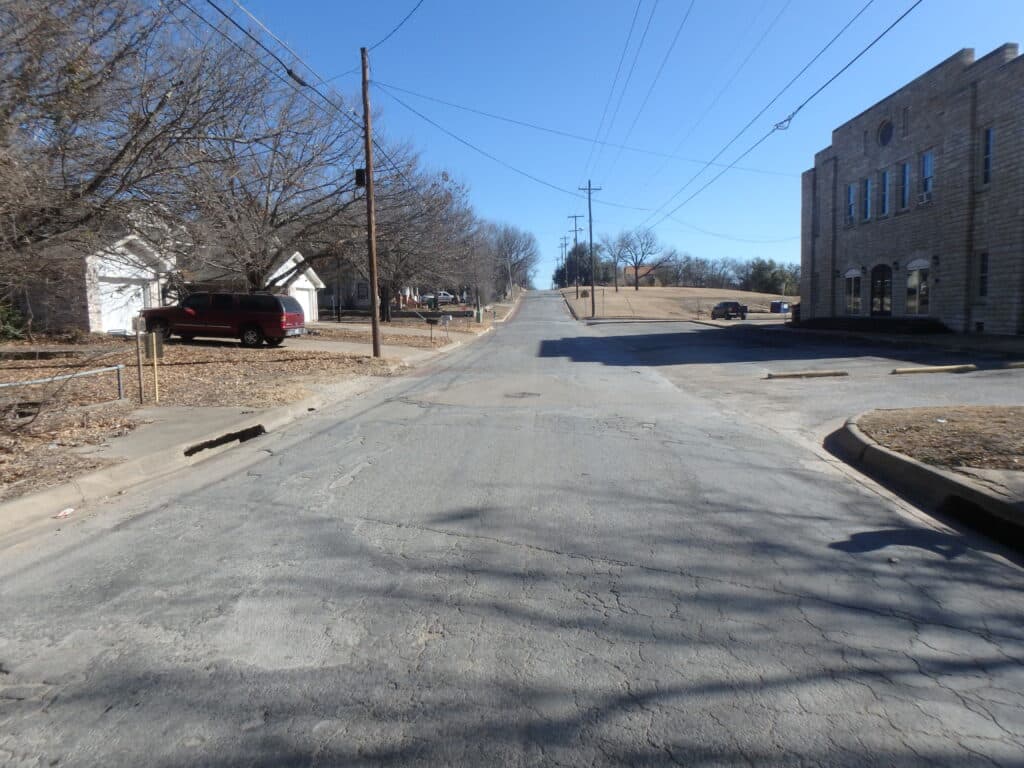
Across the street from the Stephenville Parks & Recreation office was a deteriorating 100-year-old box culvert with nearly a dozen unmarked utility lines going through it, which is against modern standards.
The project team coordinated with local utilities and City maintenance staff to determine:
-
The identity of each line penetrating the culvert
-
Who owned it
-
Whether it was still active
-
Whether it needed to be replaced, relocated or removed
Most of the lines were identified as inactive and cut, and the few remaining were relocated outside of the culvert.
The replacement culvert was custom-built to meet the roadway’s unique needs. Since the top of the culvert acted as the driving surface and was only covered by one inch of asphalt, the structure was poured as cast-in-place concrete and specially designed to handle the weight of vehicles. The street’s curb inlets then drained directly into the culvert.
Replacing this culvert will help avoid a catastrophic failure, saving the City significant maintenance and repair costs in the long term.


Preserving Access While Enhancing Mobility
Throughout the restoration of the historic brick roadway, residents maintained access to their homes’ driveways and the nearby elementary school and avoided any utility shutdowns thanks to a detailed construction phasing plan.
This $6.3 million project will allow this growing North Texas community to thrive with:
-
Safer and more reliable water and sewer access
-
A more pedestrian-friendly road with improved walkability and accessibility
-
Increased connectivity to the downtown area, as well as nearby City Park and its sports and recreation facilities