

Strengthening Wastewater Systems in Northwest Arkansas

Rogers Water Utilities is investing in the future of Northwest Arkansas by expanding the Rogers Pollution Control Facility. As the region grows denser, the facility is facing increasing wastewater flows and storm-related surges.
“Growth in Rogers isn’t just outward expansion but upward,” said Jason Cocklin, project manager. “Farmland and single-family neighborhoods are giving way to multifamily developments. That shift adds significant strain on the collection system and treatment plant.”
To address these needs, Rogers Water Utilities selected Freese and Nichols to lead the expansion design.
Expanding Capacity and Reliability
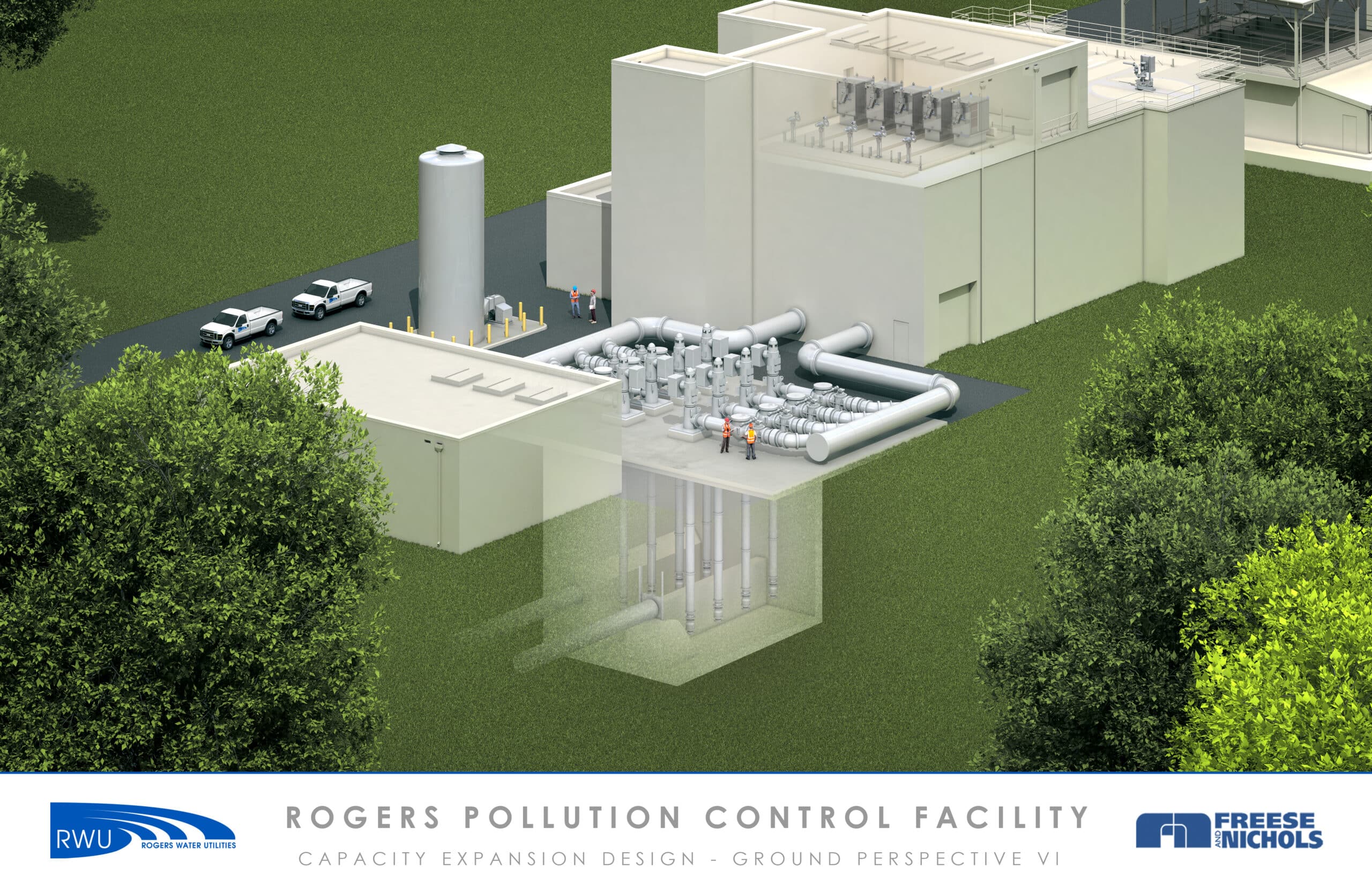
The expansion increases the plant’s ability to manage both daily flow of wastewater on normal days and during storm events. The facility is permitted to treat an average of 14 million gallons of wastewater per day (MGD); the project raises that capacity to 15.5 MGD. It will also allow for the permitted peak capacity to grow from 60 to 72 MGD. A new 6.5-million-gallon peak flow storage basin will increase their storage capacity for wastewater during these surges, giving operators more flexibility and lowering the risk of overflows.
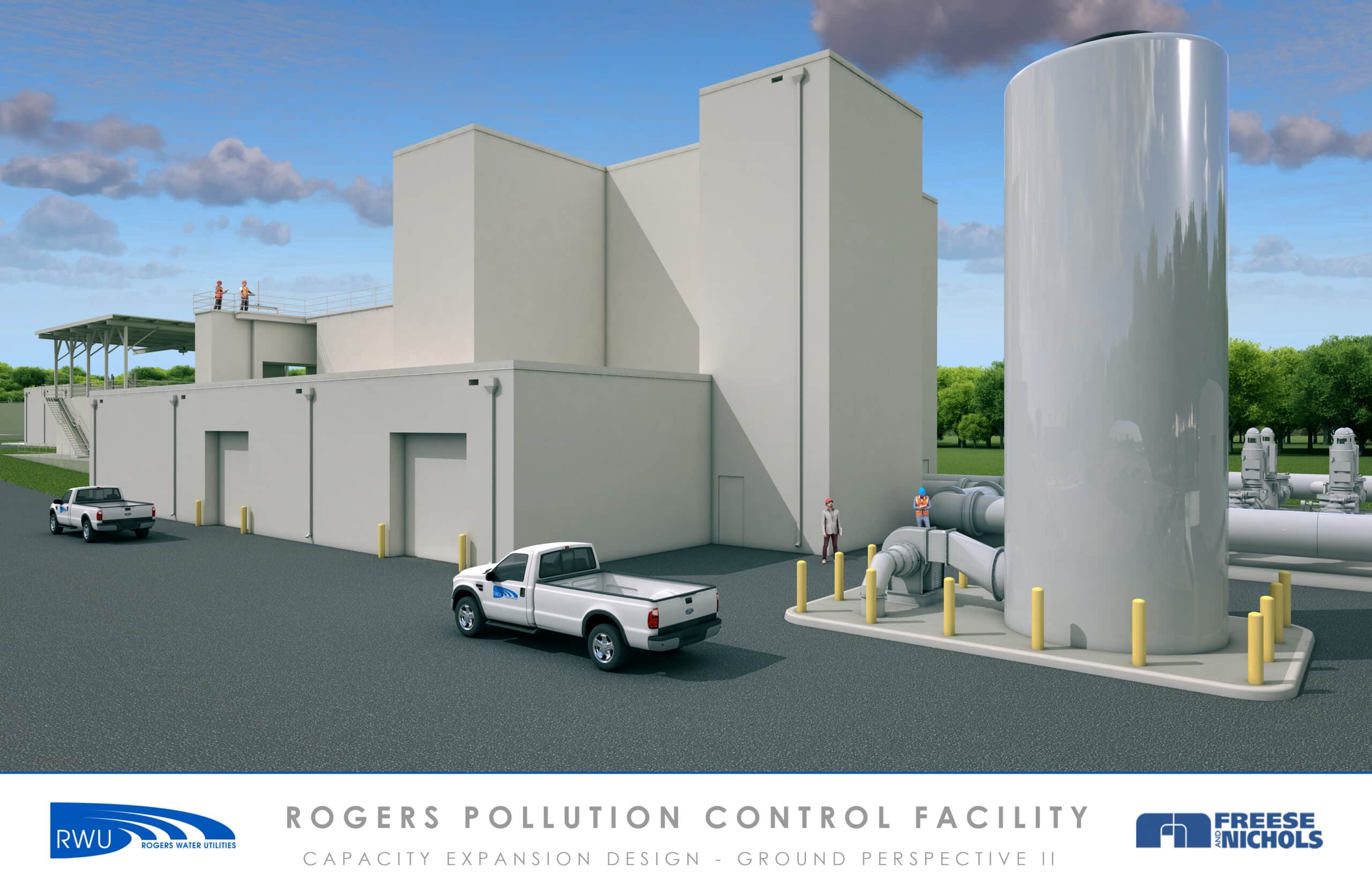
At the front of the plant, new coarse screens, fine screens and grit removal systems prevent debris from disrupting biological treatment and impacting equipment and operations. At the back, outdated filters are being replaced with modern cloth media filters that continue performing even under heavy flows.

Advancing Environmental Protection
Upgrades to the facility deliver clear environmental benefits. Robust filtration strips phosphorus and nutrients from the water, protecting local streams. The facility is also moving from chlorine disinfection to ultraviolet light, a cleaner and safer approach that eliminates pathogens while maintaining high effluent quality and minimizing chemical use. With greater hydraulic capacity, the plant better prevents overflows, safeguarding neighborhoods and waterways across Northwest Arkansas.
“The biggest environmental improvement is reducing the risk of overflows,” Jason said. “That’s a big deal. We’re also cutting down chemical consumption and sending cleaner water back into the environment.”
Partnering with Operators
Operator input shaped the project from the earliest planning stages. Their expertise guided decisions on screening technologies, filters and disinfection systems. Workshops and evaluations produced a facility plan that is both operator-friendly and technically advanced.
“Rogers and Freese and Nichols work so well together because our cultures match,” Jason said. “Their team expects collaboration at every step, and that’s exactly how we like to deliver projects.”
This approach reflects the utility’s commitment to empowering staff and planning for long-term operations.
Bringing the Design to Life Digitally
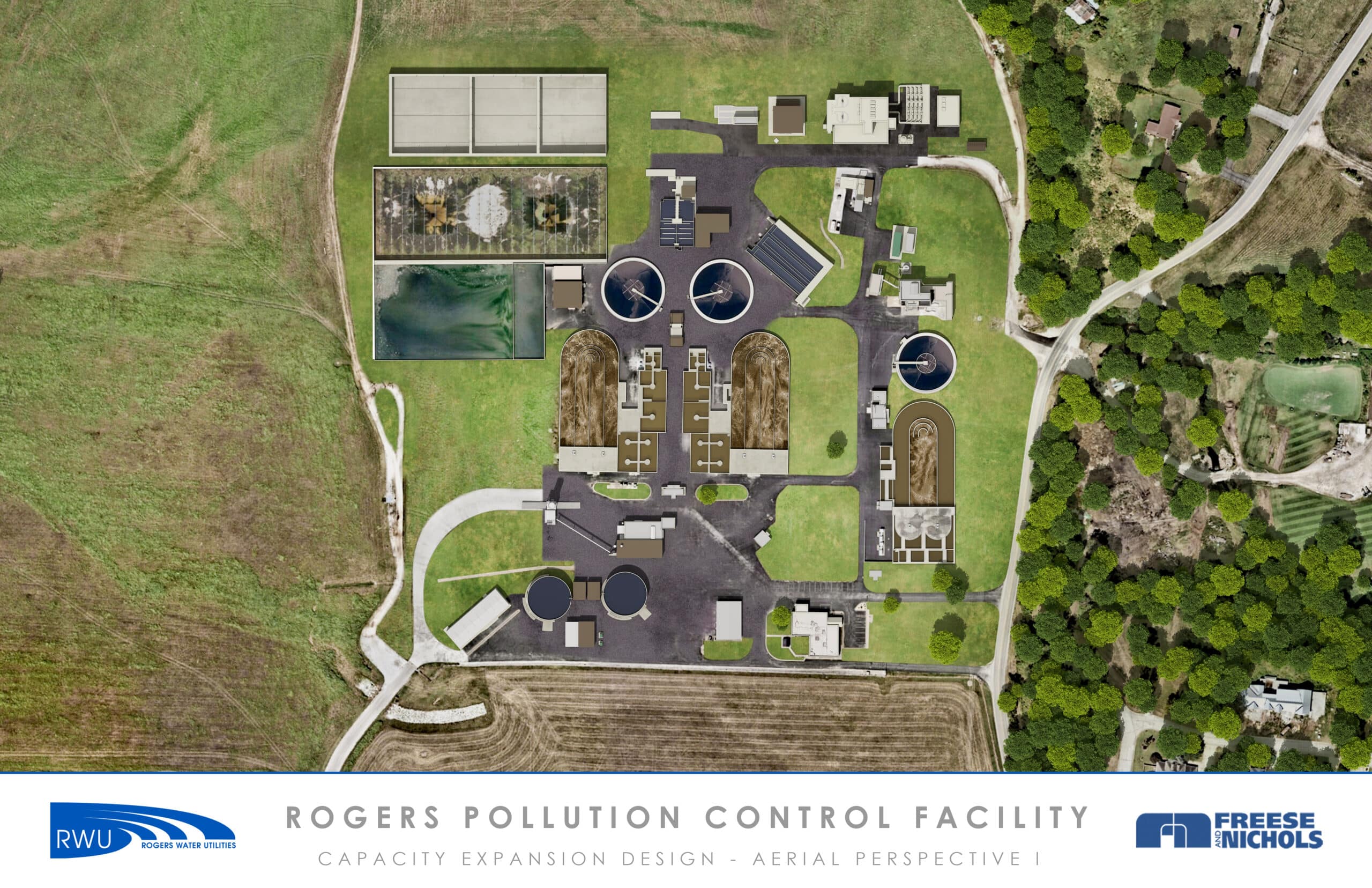
Digital delivery added another layer of value. Drone-based Light Detection and Ranging (LiDAR) and 3D modeling supported the creation of a digital replica of the facility, helping operators visualize improvements and anticipate construction impacts.
For decision makers, the visuals answered key questions about the scale and complexity of the work, turning technical plans into a clear picture of progress and building confidence in the investment.

Building for the Future
The Rogers Pollution Control Facility expansion increases treatment capacity, improves storm resilience and modernizes key treatment processes. By involving operators throughout design and using digital tools to guide decisions, Rogers Water Utilities is preparing for long-term growth while strengthening daily operations.