

Meeting People Where They Are: Engaging the Public in a Changing World

Wilson Kerr, AICP
Planner

Lavendar Pak
Planner

Karen Chavez
Planner

David Jones
Urban Planner
Keeping the public engaged has always been an important part of the planning process. As residents become busier, our Urban Planning + Design experts have revamped how they approach public engagement by thinking creatively, stepping outside of traditional engagement formats and meeting people where they are.
Across our planning work, Freese and Nichols uses a flexible engagement toolkit to help communities participate in ways that fit their schedules and comfort levels:
- Steering committee meetings provide ongoing guidance from local stakeholders
- Surveys and project websites create accessible opportunities for residents to share input, review materials and stay informed.
- Translated materials help reduce barriers and reach a broader community.
Our planning and design projects have increasingly involved engaging with people from diverse linguistic and cultural backgrounds. Effective community planning relies on ensuring that all voices are heard, yet too often language and cultural barriers exclude key members of our communities from meaningful participation. Therefore, we created a Spanish-speaking engagement toolkit that can be adapted for outreach to other language groups and serve as a model for developing additional multilingual engagement resources.
By providing practical strategies and curated resources to bridge communication gaps, this toolkit helps build trust with historically underrepresented communities, reduce language and cultural barriers and strengthen the inclusive engagement that is central to our work.
Public Engagement in Action
Cross-Functional Public Engagement Approach in Lewisville
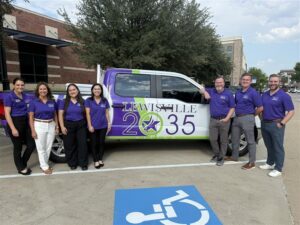
Lewisville 2035, the City’s comprehensive update to its 2025 vision plan, divided the engagement approach info four buckets: online and virtual engagement, neighborhood outreach, public town halls or workshops and committees and subcommittees. From May 2025 to July 2026, the project reached over 10,000 touchpoints, or individual engagement contributions.
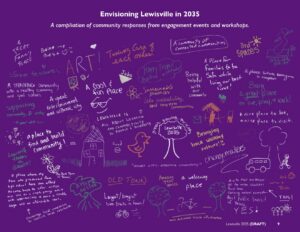
One of the more unique components of Lewisville 2035’s engagement effort is the community art project. At each community vision workshop, participants were encouraged to creatively express their thoughts and visions for how they want Lewisville to be known in 2035.
The project is also guided by a 120-member steering committee composed of community members from diverse backgrounds that serve as ambassadors of the plan in their own communities. The project team created “Meeting-in-a-Box” toolkits for members to lead conversations with their families, friends and neighbors at their own time, leveraging established relationships to raise awareness on the plan.
The project team established a presence at events, partnered with high school students activities and focused on online engagement through a project website with surveys, an interactive map, digital worksheets and a series of podcasts summarizing the process and draft deliverables.


Prioritizing Aledo’s Growing Community, Needs and Desires
Aledo is a fast-growing city in the Dallas-Fort Worth Metroplex, with a population increase of 52.9% since 2020. With that growth come changing expectations for City services and amenities. To better understand residents’ evolving needs and priorities, our experts conducted robust public outreach effort that includes nine steering committee meetings, eight public engagement events, a project website with open engagement opportunities and a community survey. The goal is to reach as many of the City’s 7,550 residents as possible.
Aledo is an attractive destination for mountain bikers due to its varied topography. To engage this group and other residents, FNI partnered with the Weatherford Mountain Bike Club to host a bike ride outreach event at Aledo’s beginner mountain bike track, allowing us to connect with park users and members of the City’s active cycling community. Engagement activities included interactive boards and one-on-one discussions with residents, with a focus on the City’s parks and recreation system.
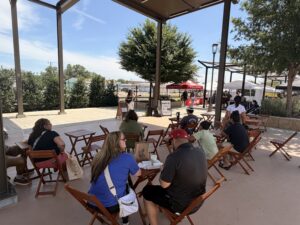
Our team also set up at a restaurant in Aledo, giving them the opportunity to hear from a different cross-section of the community, with different priorities and perspectives on the City’s parks system.
By the end of the day, we engaged with over 60 residents and gained valuable insight on the community’s needs and desires by meeting people where they already were.


Utilizing Mesquite’s Successful Downtown Market for Resident Interaction
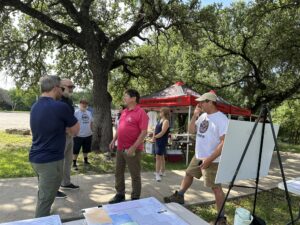
Our team kicked off its engagement effort for the Mesquite Strategic Plan and Comprehensive Plan by tabling at the City’s new weekly farmer’s market. As part of the City’s effort to redevelop its historic downtown area, they converted a formerly underused parking and loading area behind the businesses on Main Street into Front Street Station, a multipurpose space that can host events, markets and concerts.
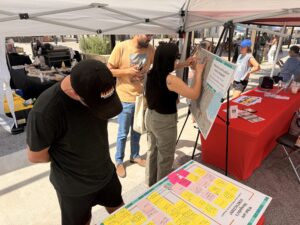
On Saturdays during the summer, the space is used for The Market. This summer, Freese and Nichols set up a table at The Market to engage residents by asking about the City’s strengths and weaknesses. While many residents shared how they enjoy attending The Market, several residents also said they would like to see similar events in other parts of the City. We were able to speak with roughly 50 residents at The Market, and we will continue using it as an engagement opportunity moving forward.
By using Downtown Mesquite as an engagement setting, we were able to build on the City’s recent successes and connect with residents in a place they already know, enjoy and take pride in. The Market created a more natural and comfortable environment for conversation and we were able to gather thoughtful input from residents who may not otherwise participate in the planning process.
Making Unified Development Codes More Accessible in Cedar Hill
As part of Freese and Nichols’ support for Cedar Hill’s Unified Development Code (UDC), the Urban Planning + Design team helped educate the community about the process and how it could affect residents, property owners, neighborhoods and businesses. Because UDC updates often involve technical and legal language tied to zoning, development, landscaping and design standards, the team created a project website and bilingual English-Spanish Q&A fact sheets to explain the UDC process and key topics in accessible terms.
These materials were shared through the City’s communications channels to help broaden awareness and participation.
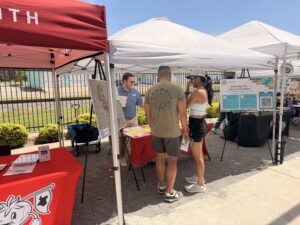
The project team also hosted a community open house during the City’s weekly Food Truck Thursday to take advantage of existing foot traffic.
To make the material easier to understand, the team created visually engaging educational stations, including a “Check Your Zoning” station where attendees could look up their properties and discuss applicable regulations with staff. All event materials were available in Spanish, and the event drew 68 attendees.

How FNI’s Engagement Toolkit Can Benefit Your Projects
Freese and Nichols Urban Planning + Design Team’s engagement toolkit is not only an effective approach for comprehensive planning and code writing, but it can be transferrable to other projects and City efforts. Targeted outreach can help gather broader input, build trust with communities and help residents better understand how projects will impact them and the broader community.
Through the engagement toolkit, Freese and Nichols can strengthen communities integrated planning efforts and deliver recommendations and projects that are less siloed, more responsive to resident and city needs and grounded in the everyday experiences of the communities we serve.
Wilson Kerr is an Urban Planner and Economic Developer who joined the FNI Urban Planning + Design Group after more than five years in the public sector and a year as a land use and zoning consultant. He has both public and private sector experience in strategic planning, zoning and entitlements, market and demographic analyses, economic development and land use planning.
Lavender Pak is an Urban Planner in FNI’s Urban Planning and Design Group. Her expertise lies in comprehensive planning, development codes and community engagement. She also has relevant experience in transportation planning and the development of maps, graphics, layouts and public engagement materials.
Karen Chavez is an Urban Planner in FNI’s UP+D Group. She has experience supporting research and drafting comprehensive plans and development codes. She also has experience with community engagement, and is especially helpful with Spanish translation, land use, transportation planning and demographic analysis. She has been responsible for supporting the development of maps, graphics, layouts and research for reports and public involvement materials.
David Jones, AICP, is a member of the Urban Planning + Design group with experience as a municipal planner for small historic communities and large suburban cities. He is based in Dallas.