EPA’s Fresh Focus on Water Reuse Can Help Boost Supplies

James Naylor
National Technical Leader, Water/Wastewater Treatment

David Jackson
Water/Wastewater Treatment Practice Leader
With water supplies increasingly strained, especially in fast-growing regions, the Environmental Protection Agency is renewing its promotion of water reuse with an updated National Water Reuse Action Plan that focuses on industry, technology and energy.
The Water Reuse Action Plan 2.0 (WRAP 2.0) will promote collaboration among states and communities and key industries, with support from federal commitments. The EPA aims to advance reuse to protect freshwater supplies while providing water for business needs such as microchip manufacturing, data center cooling, and energy generation and development.
While WRAP 2.0 doesn’t mandate action by water providers, it intends to make reuse easier to implement and identify more opportunities where it can be applied. This is important for communities and water utilities because increasing the amount of wastewater and stormwater that’s treated for potable and non-potable reuse helps build a supply that’s more resilient to drought conditions.
The agency said the initiative also will help accelerate water reuse for other “engines of economic growth,” including oil and gas operations, agriculture, auto manufacturing, and food and beverage production.
WRAP 2.0 builds on the original reuse plan, launched in 2020 to provide a nationwide framework for increasing reuse as a supplemental water resource.
This rejuvenated federal attention can help accelerate acceptance of water recycling by the public and state and local officials. While reuse is increasingly an essential component of water planning, state regulatory approaches vary widely.

What This Means for Utilities
The EPA’s commitments include:
- Streamlining permitting to expand water reuse by food and beverage companies
- Exploring ways to increase reuse in automaking
- Advancing reuse and desalination technologies to lower treatment costs
- Supporting states in expanding use of recycled water for industrial cooling
- Making it easier to reuse wastewater from oil and gas production
- Improving rural communities’ access to funding for reuse projects
Low-cost funding for reuse projects could be available through the federal program established by the Water Infrastructure Finance and Innovation Act of 2014. These loans can be combined with other sources, including State Revolving Fund assistance, grants and municipal bonds.
In Texas, the state’s new $20 billion infusion into water infrastructure includes reuse projects as eligible for funding.
Actions Water Utilities Can Take
- Develop integrated plans that include reuse: A holistic approach to planning for water supply, drinking water production/distribution, wastewater collection/treatment, stormwater management and reuse allows cities, counties and river authorities/water districts to see the big picture of their overall water needs and opportunities. It allows you to Make Every Drop Count!
- Create an inventory of potential reuse customers: Public agencies should map major water users including data centers, power plants, industrial parks, universities, airports, parks, golf courses, manufacturing sites and large commercial campuses. Identifying your potential customers and mapping them in proximity to your potential resources helps you better understand the value of potential reuse opportunities.
- Consistently communicate with economic development teams: Economic development frequently will drive the introduction of major new water users such as data centers. Water availability and wastewater management from these users are critical points of discussion.
- Identify treatment gaps: Many water providers are seeing new demands from industry with a massive increase in water footprint associated with artificial intelligence, semiconductor manufacturing and data processing. Discussions centered around water supply might fail to fully recognize the impact of wastewater treatment of the used water. Reuse can play a big role in maximizing supply and minimizing treatment impacts.
- Make public communication part of the project: Public acceptance of reuse projects, even potable reuse, is becoming more common. Still, consistent and transparent communication of the safety of water reuse, especially indirect or direct potable reuse, is essential for project success.
How Freese and Nichols Can Help
Our water resources, treatment and funding teams have extensive experience helping communities and utilities develop and implement reuse programs to boost resilient water supplies.
Examples:
- Indirect potable reuse is a key component of integrated water planning, and our teams have recently assisted the Texas cities of Cleburne and Weatherford with their programs.
- Our teams led the design and implementation of Direct Potable Reuse facilities — the first in the United States — for the Colorado River Municipal Water District and City of Wichita Falls, both in Texas.
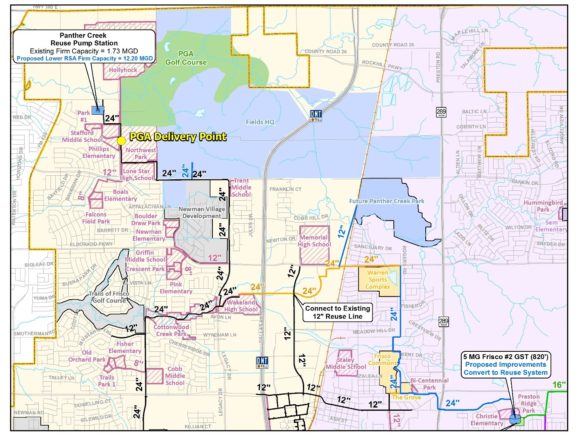
- We supported non-potable reuse system modeling, optimization and design for the San Antonio Water System and the City of Frisco, Texas.
Contact James Naylor, james.naylor@freese.com, or David Jackson, david.jackson@freese.com, to discuss WRAP 2.0, reuse or your next water supply project.
James Naylor, PE, is our National Technical Leader for Water/Wastewater Treatment. james.naylor@freese.com
David Jackson, PE, BCEE, is Water/Wastewater Treatment Practice Leader, based in Fort Worth. david.jackson@freese.com