

Experts Share Practical Asset Management Strategies for Municipal Leaders

Brandon Huxford
Transportation Engineer

Jennifer Wasinger
Account Director

Jeremy Rice
Hydrologist

Clay Herndon
Transmission and Utilities Engineer

Kayla Burd

Matt Sandige
When infrastructure needs outpace available funding, how do municipal leaders decide what comes first?
That question is becoming more important as communities manage aging infrastructure, limited budgets and growing expectations for reliable service. A thoughtful asset management approach can help leaders move beyond reacting to the most immediate problem and make investment decisions based on condition, risk, performance and community priorities.
At the Oklahoma Municipal League Conference, Freese and Nichols shared practical strategies for putting that approach into action during the session Leveraging Asset Management to Optimize Municipal Infrastructure Performance.
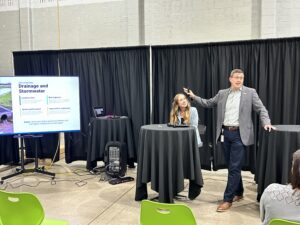
One of the team’s key messages was to prioritize projects using better data. A long-range master plan may identify the ultimate need for a system, but that does not mean every project should automatically be designed exactly as envisioned when it reaches the scoping stage. More current condition data, performance measures and risk assessments can help communities reanalyze the need at the project level and determine the best-fit investment for today while still keeping the long-term plan in view.
That analysis-led design approach gives municipal leaders a stronger foundation for deciding what to maintain, rehabilitate, replace or defer. For example, a master plan might identify the eventual need to replace a larger facility or widen a corridor, while project-level analysis shows that targeted rehabilitation, operational improvements or a smaller phased investment can address current performance needs, extend the life of an existing asset and defer major capital costs without losing sight of the long-term solution.
These strategies can apply across a community’s infrastructure portfolio, including streets, stormwater systems, water and wastewater infrastructure, public facilities and capital improvement programs. The session featured examples from wastewater rehabilitation planning in West Tulsa, transportation asset management and stormwater condition assessments. Each showed how communities can use better information to prioritize projects and right-size investments based on risk, performance and current need instead of simply responding to the most urgent issue or defaulting to an older planning assumption.
Technology can help communities put that information to work. GIS, asset management systems, artificial intelligence, analytics and dashboards can organize data, reveal patterns and track performance. The key is to start with the decisions a community needs to make, then use the right data and technology to support them.
Ultimately, successful asset management is not about collecting more data. It is about using information more effectively to answer practical questions: What has changed since the master plan? What does the latest analysis show we actually need to build now? Which assets can we extend through maintenance? And how can today’s investments deliver the most value over time?
Freese and Nichols works alongside communities to answer those questions by connecting engineering, operations, financial planning and technology into practical asset management strategies. By turning infrastructure data into actionable information, communities can prioritize investments, extend asset life, improve service and make confident decisions about what to build now, what to defer and how to plan for the future.
Brandon Huxford leads traffic engineering and roadway design projects for the Central Plains region. He is based in Oklahoma City.
Jennifer Wasinger is an Account Director in the Central Plains Region. She has more than 25 years of experience in securing state and federal funding for infrastructure-related projects.
Jeremy Rice is a hydrologist who leads our Water Resources Planning team for the Central Plains. He is based in Tulsa.
Clay Herndon, PE, leads Freese and Nichols’ water and wastewater utilities team for Oklahoma.
Kayla Burd is a Transportation Engineer and Project Manager based in Oklahoma City with broad experience in roadway rehabilitation, full-depth reconstruction, traffic analysis and stormwater design.
Matt brings municipal leadership, planning, and project delivery experience, including service as a City Manager, Assistant City Manager, and Senior Planner. Throughout his career, he has guided public infrastructure, facility improvement, and community development projects from concept through implementation, serving as the owner’s representative and coordinating consultants, contractors, stakeholders, and City staff.