Honoring Our Veterans: Stories, Service and Shared Lessons
To observe this Nov. 11, we asked some of our colleagues who are military veterans to share enduring lessons they learned during their service. We honor them and all who have served our country.
A message from Dustin Pope, Veteran and President of Next Mission ERG

“Veterans Day is an opportunity to pause, reflect and thank the people who have served our country, along with the families and communities who have supported them.
At FNI, we are proud of our veterans and the leadership, teamwork and commitment to service they bring to our firm and our communities.
Through Next Mission, our Veterans Resource Group, we are continuing that spirit of service. Next Mission is for everyone at FNI, whether you’re a veteran, have a connection to the military or simply have a passion for supporting veterans and their communities. Together, we can build connections, support one another and create meaningful opportunities to give back.
This Veterans Day, I encourage each of us to take a moment to recognize the veterans around us and consider how we can continue supporting those who have or are currently serving.
To our veterans, military families and everyone who supports them, thank you for your service, sacrifice and continued commitment to our communities.”
Freese and Nichols’ staff includes military veterans from across most of the service branches, and some continue to serve in the reserves, even taking time from their company jobs to deploy abroad. We value their service, the sacrifices they and their families have made and the unique perspectives they bring from their military experience.
Here are some of their stories:
Trooper Smith, Practice Leader, Atlanta
What branch did you serve in, and for how long?
U.S. Army, eight years.
What enduring lessons did you learn from your military service?
Plan for the worst and have backup plans ready for when situations change.
How did your military experience influence your career path?
The military provided me with many experiences in non-combat and combat zone, and the most important pieces I gained from the military experience is the total teamwork (planning and execution) of small and large military missions, whether that be a couple soldiers, a company, a battalion, etc. And in this topic of teamwork, everyone realizes that each person’s efforts are critical and dependent on mission/team success.
Did Freese and Nichols’ support for veterans factor into your decision to join the company?
At the time I joined, I went to our CEO Bob Pence about joining the military. He was highly in favor, and FNI supported me through basic training, officer candidate school (OCS), the basic officer course (Combat Engineering), my Iraq deployment and the closing years of my time in the military. Gordon Wells (retired) and Rich Heine also spent time with me before I deployed in 2005, sharing their Iraq experiences and tips. The guidance from Bob, Gordon and Rich were priceless and appreciated, as well as the overall support from FNI leaders and staff.
What lessons or skills did you gain during your service that translate to your current role?
The teamwork planning and execution noted above. At FNI, I do my best to communicate team successes versus individual success or one person’s contributions on a team project or program. Highlighting individuals is great, but when you can foster teamwork within teams regardless of how many hours or contributions individuals exert can create an awesome teamwork atmosphere that can benefit ongoing projects and also those in the future. As well, the junior staff on those assignments create the leadership of teamwork that they emphasize when their careers grow, and they take on more responsibilities.
What do you wish civilians knew about military service?
That military service is great for everyone and this country; encouragement to join and serve.
Adam Payne, Group Manager, Dallas 
What branch did you serve in, and for how long?
I was in the U.S. Army for just under eight years (4.5 years active and three in National Guard while working at FNI)
Why did you enlist?
My family has a family history of service with my father (U.S. Army pilot in Vietnam for two tours) and Jeff Payne (U.S. Air Force with two combat deployments). We had several more extended family members that served as well. It was something I grew up around and witnessed the pride in our nation through their service. I wanted to serve the country before beginning my civilian career.
What enduring lessons did you learn from your military service?
Planning is critical, but a good plan almost immediately needs to be modified when you put it into motion. Indecision is the worst decision, and avoid analysis paralysis. The hard stuff you encounter will be what you learn the most from and also what you tell stories about later in life with others. It can always be hotter than August in Texas.
How did your military experience influence your career path?
The Army has a funny way of putting you in a job that doesn’t necessarily translate to the civilian world! I was a field artillery officer in the Army, and the only career I could have used that experience was to fire a cannon into the Rocky Mountains to start controlled avalanches.
The avalanche people were not hiring, so I decided to lean heavy on the leadership aspect of things. Initially, it helped my career to understand how to engage in teams. Do the best I can at soaking up information from FNI leaders and apply it day to day. Then my career progressed into team and ultimately group leadership. I feel like the Army did a good job preparing me to operate in and lead a team.
Did Freese and Nichols’ support for veterans factor into your decision to join the company?
Jeff was able to introduce me to several other veterans when I was making my decision to leave the Army and enter the civilian world. While looking into various companies, I spoke with Gordon Wells and Rich Heine. I met Bob Pence, Richard Provolt and many others after I started. Jeff also deployed to Iraq the same day I returned, so I was able to see first-hand how FNI supported him through that deployment.
What lessons or skills did you gain during your service that translate to your current role?
Leadership: how to care for folks around you. Teamwork: how to work with supporting groups around you. Planning and implementation of the plan.
What do you wish civilians knew about military service?
The team around you in the military is so diverse and truly is a cultural/regional cross-section of the United States. It is amazing to see people from all corners of the country coming together and getting very complex missions done as a team. Lots of random folks coming together and getting stuff done.
Lori Reza, Regional Marketing Supervisor, Austin
What branch did you serve in, and for how long?
U.S. Navy, five years.
Why did you enlist?
I needed a path forward, and it seemed like the best option.
What enduring lessons did you learn from your military service? Being resilient. There are times that will feel tough or impossible; there is a way out- you just have to find it. Also, being able to adapt to a changing situation. Expect change and think ahead.
How did your military experience influence your career path?
The Navy was always a stepping stone for me and feels like a lifetime ago. I knew going in that I wasn’t a lifer, but I also knew that I could gain a lot of life experience. It was the biggest “out of my comfort zone” experience and continues to remind me that I am capable of more than I think.
What lessons or skills did you gain during your service that translate to your current role?
You work with a lot of personalities in the service. You really have to be open to and willing to see and hear different perspectives. You learn to work together; you don’t have a lot of choice when you’re stuck on a ship together for eight months. This is helpful being in a group that works across all groups and regions. My time serving was also instrumental in my leadership role. Some of my most inspiring leaders are from my time in the Navy.
What do you wish civilians knew about military service?
That every veteran and active-duty service member has sacrificed time. We missed birthdays, weddings, funerals, holidays, and we all handle that differently, but it’s not easy to be away during those moments. For some, serving is a brief chapter in their lives, and for others it’s the shining light in their life.
Bruce Leuthold, Program Manager I, Austin 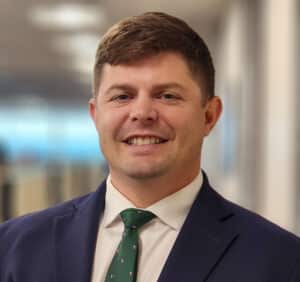
What branch did you serve in, and for how long?
I served 13 years on active duty in the U.S. Army as an engineer officer. I transitioned to the Army Reserve in 2025, where I continue to serve.
Why did you enlist?
I wanted to give back to the country that has blessed me with so much. We have a beautiful country that is worth protecting.
What enduring lessons did you learn from your military service?
I learned that people need to know you genuinely care about them. When they do, it’s amazing what you can accomplish together. I also learned the importance of asking questions and listening. Some of the best lessons I learned came from the soldiers I had the responsibility of leading.
How did your military experience influence your career path?
Serving as an Army engineer officer was a natural foundation for a career in program management. I wanted to continue leading teams, solving complex problems and contributing to projects that serve our communities.
Did Freese and Nichols’ support for veterans factor into your decision to join the company?
Yes, I appreciated the company’s support for veterans and recognition of military experience. I was also drawn to the opportunity to continue serving public agencies through meaningful infrastructure projects.
What lessons or skills did you gain during your service that translate to your current role?
Leadership, planning, risk management and working with diverse teams are the obvious ones. But one of the most valuable lessons the Army taught me was to remain flexible and recognize how much a positive attitude can influence those around you.
What do you wish civilians knew about military service?
Military service is a family commitment. Behind every service member are spouses, children and loved ones who make sacrifices that often no one sees. Their support is a large part of what makes service possible.
Bill Pannell, Construction Manager VI, Fort Worth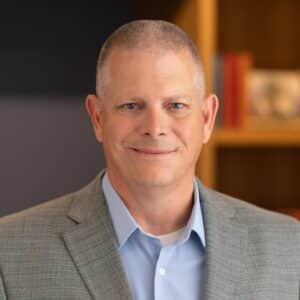
What branch did you serve in, and for how long?
U.S. Navy, 20 years (1982-2002), retired chief petty officer
Why did you enlist?
College was out, as I hated conventional classrooms, mostly hated learning things I had little to no interest in. I wanted technical training and selected an advanced technical field in the Navy.
What enduring lessons did you learn from your military service?
People and results matter more than process and titles. A highly motivated and results-oriented team can achieve more than any one of them as individuals realize. I was exposed to real leadership and learned quickly that the leader is not always the one with the highest “rank,” but often the one willing to stand up and push ahead.
How did your military experience influence your career path?
Problem-solving in a fast-paced environment, with real impact and a high risk of failure, was routine, and this became something I really fell in love with. I searched high and low, moving through different career fields as a civilian before I landed at FNI – and this company, along with the work we do, fit me like a glove. I felt like I had finally found my spot!
Did Freese and Nichols’ support for veterans factor into your decision to join the company?
I knew FNI had several veterans on staff. I was a client long before I joined the firm. I could see the natural fit of the vets on the teams I worked with, and that was appealing.
What lessons or skills did you gain during your service that translate to your current role?
Problem-solving, a willingness to learn and ask questions, being comfortable in uncomfortable situations and knowing how to follow as the path to knowing how to lead.
What do you wish civilians knew about military service?
Hollywood never gets it right – never.
Connie Lein, CRM and Data Manager, Corpus Christi
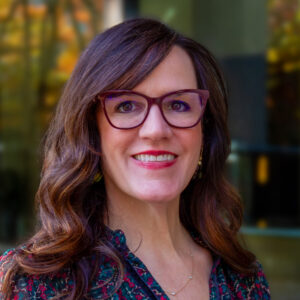
What branch did you serve in, and for how long?
I served four years in the U.S. Navy. When I was in Radioman “A” School, I was first in my class when it came time to choose from the available duty stations and chose a NATO assignment located in Naples, Italy where I spent a little over three years. Great duty station even if Naples is the armpit of Italy.
Why did you enlist?
Growing up in Wichita Falls, Texas, I knew I wanted to do something different. I wasn’t quite ready for college and the Navy seemed like a great way to see the world and figure out what I wanted to do with my life. And it turned out to be a pretty great decision, and if I had a choice, I would do it all over again!
What enduring lessons did you learn from your military service?
At 19 years old, I found myself halfway around the world, stationed at a NATO base in Naples, Italy, supporting joint operations in other countries. A friend from Navy “A” School and I were among the youngest people assigned to the NATO base, surrounded by people of all branches and ranks higher than ours. Needless to say, I had to grow up pretty quickly! I learned independence, adaptability, and that you don’t have to know everything as long as you’re willing to learn and know how to ask for help.
And one of my greatest blessings was the lifelong friendships I made. We managed to stay connected long before social media existed, and more than 30 years later, we’re still getting together and traveling together!
How did your military experience influence your career path?
Considering I now manage a CRM system and team, I’d say I’ve come a long way! When I joined the Navy, I didn’t know the first thing about computers. I went through Radioman “A” School, which I’d describe as being trained on prehistoric equipment. When I arrived at my first duty station, everything was computerized, and I was lost. I remember accidentally closing a program, thinking I’d broken the computer, and asking someone to fix it. They’d reopen it, and I’d think they were a genius.
About a year later, I was transferred to Network Operations, where I suddenly needed to not only know how to use a computer, but also troubleshoot users’ computer problems. Talk about sink or swim! Fortunately, I swam! That experience taught me to figure things out, ask questions, and lean on people who know more than I do. Skills I still use every day. And while the GI Bill wasn’t why I enlisted, it was another tremendous benefit that helped me earn my college degree.
Did Freese and Nichols’ support for veterans factor into your decision to join the company?
I’d love to say yes, but if I am honest, the answer is no. It has definitely been something I have truly appreciated over the years – I appreciate and admire how our company recognizes and honors veterans.
What lessons or skills did you gain during your service that translate to your current role?
How to use a computer! On a more serious note, I learned firsthand how even the smallest details can have a big impact when managing systems. Problem-solving, adaptability, teamwork, and knowing when to lean on subject matter experts. The Navy taught me that you don’t have to have all the answers, but you do need to be willing to find them. Managing a CRM system and team means there’s always something new to figure out. Fortunately, the Navy taught me not to be afraid of a challenge, even when I have no idea what I’m getting into.
What do you wish civilians knew about military service?
Military service gives you opportunities you might never have otherwise. You get to see places you may never otherwise visit, meet people whose paths you might never have crossed, and learn skills you never knew you could have. It challenges you, helps you grow, and opens doors you didn’t even know existed. But some of the greatest things you take away are the friendships. You meet people who become lifelong friends, who cheer you on and genuinely want to see you succeed.
I joined the Navy to do something different. I walked away with an experience I could never have really expected, and I am thankful for it. I’m incredibly grateful for the opportunity to have served, and I’ll always be proud to be a Navy veteran. GOOOO NAVY!
Brad Endres, Engineer VII, Fort Worth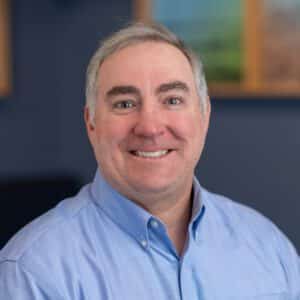
What branch did you serve in, and for how long?
Army Engineer, 20.5 years
Why did you enlist?
Attended the U.S. Military Academy (West Point) from high school (Austin Westlake); commissioned as an engineer officer.
What enduring lessons did you learn from your military service?
Learn quickly and adapt to the environment.
How did your military experience influence your career path?
The Army engineer branch encouraged certification as a P.E. Over 20 years, I served about six years with the U.S. Army Corps of Engineers (USACE) and was exposed to technical engineering on a wide range of large-scale projects. This led me to seek a second career in the Architecture, Engineering and Construction (AEC) industry.
Did Freese and Nichols’ support for veterans factor into your decision to join the company?
Yes – FNI values military service, and it shows in the number of veterans on staff.
What do you wish civilians knew about military service?
Military service requires support from society – so continue to support those serving today in any form of service – active/reserve/guard, etc.
Jeff Payne, Chief Operating Officer, Fort Worth
What branch did you serve in, and for how long?
I did a combination of the U.S. Air Force (USAF) and the USAF Reserve for a total of 20 years.
Why did you enlist?
I have a history of military service in my family, and my dad was a big example for me. I was taught this country is an amazing place, and it is worth serving and protecting.
What enduring lessons did you learn from your military service?
Integrity first. You have to absolutely be able to trust the person on your left and right. Without integrity, things break down quickly. Teamwork. With a clear mission, it is amazing what a high-performing team can accomplish! Discipline and Consistency. Sometimes discipline and consistency can be boring but they both pay off in the long run. This country is special. Visiting many places across the world help reinforce that.
How did your military experience influence your career path?
I don’t know that it did totally. I didn’t know if I would be career active duty or not when I started. I just went with the flow and what worked for my family and life.
Did Freese and Nichols’ support for veterans factor into your decision to join the company?
I knew there was a history of service among its past and present leaders at the time I started. However, how FNI supported me and my family when I was recalled to active duty for another tour in Iraq left me with no doubt that we love our veterans and military service.
What lessons or skills did you gain during your service that translate to your current role?
I pretty much owe who I am as a leader to the military. The list of lessons is way too long to list.
What do you wish civilians knew about military service?
No matter what branch you joined or what your job was in the military, everyone signed up for this country and were an integral piece of the military’s success.
Laura McArthur, Senior CRM/Sales Content Specialist, San Antonio
What branch did you serve in, and for how long?
Navy, six years
Why did you enlist?
I wanted to travel, experience different cultures and see more of the world. And if I’m being completely honest, a big part of it was simply wanting to get out of San Antonio and experience life beyond my hometown.
What enduring lessons did you learn from your military service?
I learned to appreciate what I have, be resourceful and not throw in the towel when things get difficult. I learned the importance of teamwork and that you can be direct with people while still treating them with respect.
How did your military experience influence your career path?
The technical skills I gained in the military, paired with the writing skills I strengthened in college, helped me create a technical writing role at my first civilian job where there was a need but not an established position. From there, I was able to apply my technical knowledge and troubleshooting skills while working with engineers across different disciplines. The science was often the same, even when the applications were different.
Did Freese and Nichols’ support for veterans factor into your decision to join the company?
Yes.
What lessons or skills did you gain during your service that translate to your current role?
My military service taught me how to take technical information, understand it and communicate it clearly. I pay attention to details. It also taught me how to work with people with different backgrounds and communication styles, be part of a team and be direct while still being respectful.
What do you wish civilians knew about military service?
The work is hard, the expectations are high and the sacrifices we make are not always visible to others. It can be stressful. You have experiences and witness things that others may never encounter, including some things you can’t unsee. You meet some great people, but you also learn to watch your back around others. Maybe most importantly, you learn to trust, but verify. And I would do it all over again!
Aaron Conine, Transmission-Utilities Group Manager, Fort Worth
What branch did you serve in, and for how long?
A combination of active-duty service in the U.S. Air Force for five years and various USAF Reserve components for six years before resigning my commission in 2018.
Why did you enlist?
I decided to apply to the Air Force partly because of the opportunity to serve my country and partly because I felt I wanted something more from my four years of college than just an academic education.
What enduring lessons did you learn from your military service?
First, there is an expert out there; find them, ask questions. Second, don’t be scared to fail. Just fail forward and learn from it. Third, integrity comes first, last and always. Fourth, your people are the engineers, so pour into their development.
How did your military experience influence your career path?
It prepared me to manage large teams on complex projects early on, which allowed me to focus on the technical gap due to my role in the Air Force having limited technical design aspects.
Did Freese and Nichols’ support for veterans factor into your decision to join the company?
It did not in the way you might think today. Fourteen years ago, the company was much smaller (no ERGs), and what influenced me is that I decided I trusted our leaders (Bob Pence, Gordon Wells, Brian Coltharp and Jeff Payne) when they said they would support me however I or family needed during my reserve duty, and they did when I got called to deploy in Winter of 2013/14.
What lessons or skills did you gain during your service that translate to your current role?
In my current role as a Group Manager, I think the importance that the Air Force placed in supporting your people and understanding the human side of the folks you manage or report underneath is a lesson that hopefully I am putting into action for 1112. Without your team/group, you do not accomplish the mission/project/etc.
What do you wish civilians knew about military service?
It was a privilege to serve and represents a profoundly impactful time in our lives.
Bryan Wren, Program Manager III, Harlingen
What branch did you serve in, and for how long?
I served in the United States Air Force for four years on active duty, followed by six years in the Air Force Reserve and Air National Guard, for a total of 10 years of military service.
Why did you enlist?
I wanted to join the Air Force from the time I was a young child. Aviation has always been a passion of mine, and I began working around aviation and airports when I was just 14 years old. Joining the Air Force was a natural next step that allowed me to continue pursuing that passion while serving my country.
What enduring lessons did you learn from your military service?
One of the most enduring lessons I learned was to always pay attention, continue learning and take advantage of opportunities to develop new skills. The knowledge and experience you gain along the way can help put you on the right path and prepare you for opportunities later in your career.
How did your military experience influence your career path?
My military experience taught me the importance of honesty, integrity, accountability, and doing the right thing, even when no one is watching. Those values have stayed with me throughout my career and have influenced how I approach my work, make decisions and work with others.
Did Freese and Nichols’ support for veterans factor into your decision to join the company?
Yes. Freese and Nichols recognized the value of my military experience and welcomed that part of my background. I appreciated joining a company where my service, experience and the values I gained through the military were respected.
What lessons or skills did you gain during your service that translate to your current role?
My military service reinforced the importance of always doing your best, communicating openly and honestly, working as part of a team and maintaining integrity in everything you do. Those principles have carried throughout my aviation career and continue to guide me in my role today.