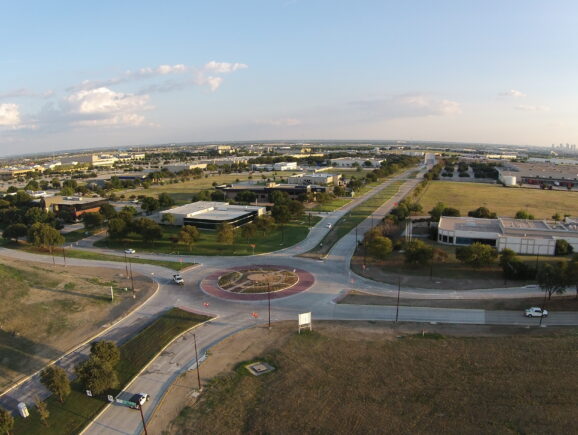
Making shared travel corridors safer and people-centered
Even in communities where cars and trucks still dominate, residents increasingly want other options for getting around — and they want to feel safe on their journeys.

Freese and Nichols transportation engineers and planners are helping meet those expectations through thoughtful infrastructure that promotes road sharing among cyclists, pedestrians and motorists.
Civil Engineering Magazine online highlights projects in Norman, Oklahoma, and Dallas and Richardson, Texas, that demonstrate how measures like medians, shared-use paths, protected intersections, and road diets can expand mobility while improving safety.
Read “4 infrastructure projects that are making walking and bicycling safer” for insights from Kayla Burd, Kevin St. Jacques, Todd Buckingham and Martin Rutter and tips for creating safer, more effective walking and biking environments.
An excerpt:
“The importance of safety, both real and perceived, can’t be overstated. Pedestrians and cyclists feel safer when infrastructure protects them from cars and trucks and accommodates all transportation modes. The perception that bicycling or walking on certain roads is hazardous can be difficult to overcome…

“Communities in regions where cars and trucks have long ruled the roads are doing more to adjust their transportation networks to support safe, connected, and people-centered mobility. These kinds of improvements don’t have to be major overhauls; a relatively small adjustment can have significant impact.”
For more information about Freese and Nichols’ transportation services, contact Kayla Burd, kayla.burd@freese.com, Kevin St. Jacques, krs@freese.com, Todd Buckingham, todd.buckingham@freese.com, or Martin Rutter, martin.rutter@freese.com